ACFPE 2026 Call for Special Session
The ACFPE 2026 organizing committee invites proposals for special sessions. The special sessions will complement the regular program with new or emerging topics of particular interest at specific or cross levels-of-abstraction, including state-of-the-art research in both academia and industry in special, novel, challenging, and emerging topics.
Special session proposals should be submitted by the prospective organizer(s) who will commit to promoting and handling the review process of special session as Chair or Co-Chair of the event. One special session lasts 2 hours, which allows 6-10 oral presenters. If the number of presenters is beyond the capacity, parts of them will be arranged to poster sessions. Accepted and presented papers will be included in the conference proceeding, and submitted to related databases.
• Proposal Submission Deadline: April 15, 2026
• Acceptance Notification Deadline: April 30, 2026
________________________________________
• Proposals Submission Guidelines
Proposal Template is provided indicating: Title; Introduction and Topics; Organizer's Information, etc.
Please complete the special session proposal form and send to acfpe@vip.163.com before the deadline.
Special Session 1: AI-Enabled Stability Mechanism Analysis and Adaptive Control Technologies for New-Type Power Systems(专题1:人工智能赋能的新型电力系统稳定机理解析与自适应控制技术)
Chair: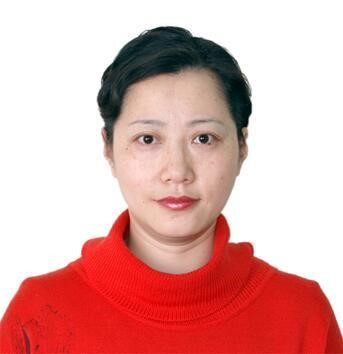 Yuhong Wang, Sichuan University, China Yuhong Wang, Sichuan University, China |
Vice Chair 1 : Vice Chair 2 : |
Description of the Session: Related Topics: |
|
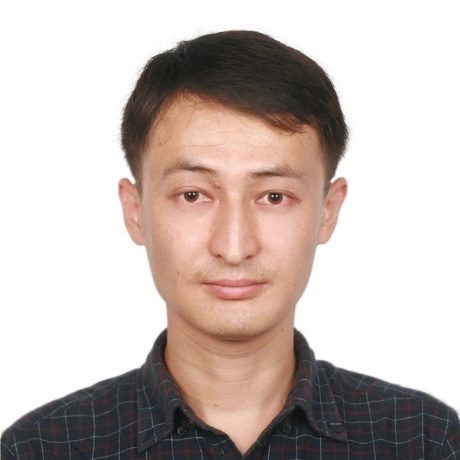 Zongsheng Zheng, Sichuan University, China
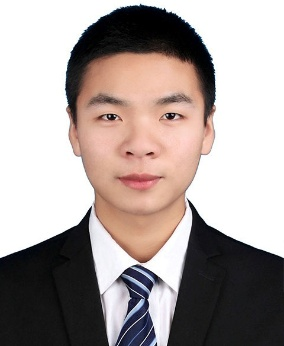 Shilin Gao, Sichuan University, China
Special Session 2: AI-Enabled Power Quality Analysis and Mitigation in New-Type Power Systems(专题2:人工智能赋能新型电力系统电能质量分析与治理)
Chair: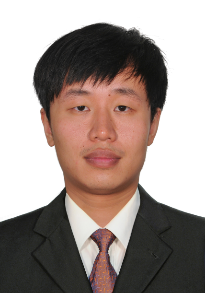 Yi Zhang, Fuzhou University, China Yi Zhang, Fuzhou University, China |
|
Description of the Session: Related Topics: |
|
Special Session 3: Aggregated flexible resources for hierarchical coordinated operation and control in new distribution networks(专题3:面向新型配电网分层协调运行控制的分布式资源聚合)
Chair:  Yiyao Zhou, Xihua University, China Yiyao Zhou, Xihua University, China |
Vice Chair:  Xuefei Zhang, Xihua University, China Xuefei Zhang, Xihua University, ChinaVice Chair:  Jian Wang, Hohai University, China Jian Wang, Hohai University, China |
Description of the Session: This special session focuses on the key theories, methods, and emerging technologies for aggregated flexible resources supporting hierarchical coordinated operation and control in new distribution networks. It aims to explore flexibility extraction, aggregation modeling, and coordinated optimization mechanisms under complex operating conditions and multi-timescale coupling, particularly in the context of low-carbon energy transitions. Topics of interest include, but are not limited to: aggregation modeling and equivalent representation of distributed resources; flexibility characterization and uncertainty-aware capability boundaries; hierarchical and multi-timescale coordinated operation and optimization; coordination mechanisms between virtual power plants (VPPs) and distribution networks; market-based participation and incentive mechanisms for multi-agent systems; flexibility-oriented control for power quality and system resilience; as well as data-driven and AI-enabled approaches for aggregation and coordinated control. Contributions on theoretical advances, key technologies, system integration, and real-world demonstrations are highly encouraged. This session aims to bring together cutting-edge research and practical insights to advance the development of efficient, intelligent, and sustainable distribution networks with high penetration of distributed energy resources. Related Topics: |
|